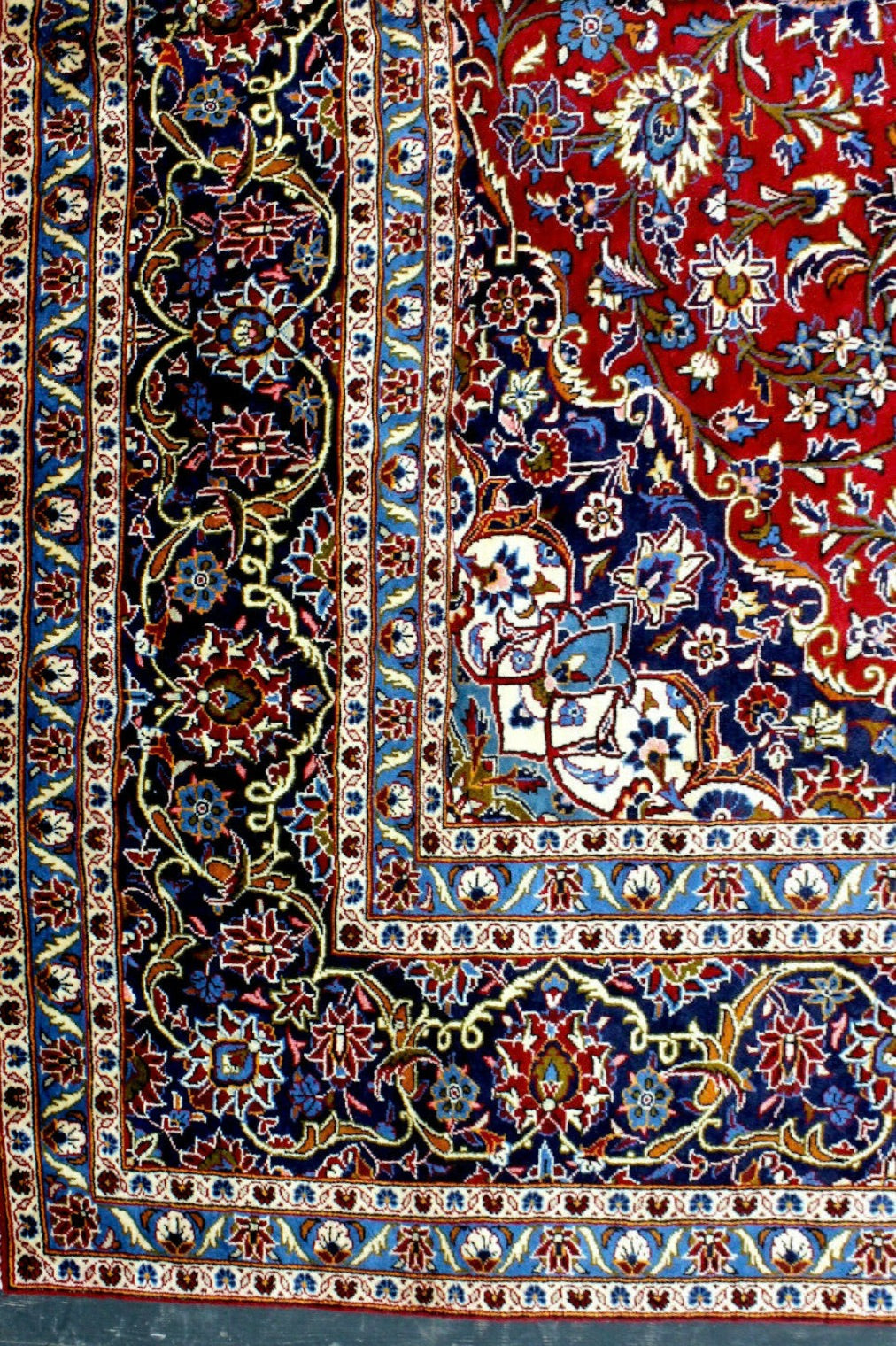

Selecting a vintage rug is more about intuition and taste, than it is about technical knowledge. Trust your instincts. Follow your eye and keep our expert tips in mind as you choose the best hand-knotted vintage rug for your family and your home.
In this guide, we’ll walk you through how to choose a vintage rug with confidence, recognize quality craftsmanship, and select the right size, materials and construction.
Antique vs. Vintage vs. New Rugs
Antique rugs are generally more than 100 years old.
Vintage rugs are typically at least 20-100 years old.
At Rugnet, the only new rugs we carry are wool rugs hand-knotted in India selected for their exceptional craftsmanship and materials. High-quality Indian rugs often use New Zealand wool, which tends to be softer with a slightly higher pile. Because of this, their decoration may appear less crisp than a vintage/antique rug with a lower time-worn pile.
Materials: What to Look for in a Hand-Knotted Rug
Regardless of age, always look for rugs hand-knotted with natural materials.
Machine-made polyurethane rugs are mass produced. They will not age beautifully, and they lack the durability and natural stain resistance of wool rugs.
Wool
The most popular material material used in hand-knotted rugs because of its:
· Durability
· Natural stain resistance.
· Soft texture
· Longevity
Most wool rugs are woven onto a cotton foundation. Smaller tribal and village rugs may be wool woven onto a wool foundation, which makes them thicker and more rustic.
To determine of a rug’s foundation, look at the fringe.
· Soft string-like fringe: Cotton foundation
· Thicker wool strands: Wool foundation
· Extremely thin, soft strands: Silk foundation (very rare)
Silk
Silk adds elegance and a subtle luminous detail. We occasionally carry wool rugs with silk accents, which allow for very detailed decoration.
Rugs made from 100 percent silk are delicate and best suited for a very low-traffic area or even wall display.
Cotton
Cotton is the most common foundation for large hand-knotted rugs. It provides stability and allows for intricate weaving techniques.
How to Tell if a Rug is Hand-Knotted or Machine-Made
Less reputable rug sellers sometimes misrepresent machine-made rugs as hand-knotted. Here are some tips:
Look at the Back
Flip over a corner to see uneven knotting on the back, as seen in our vintage Persian Baluch rug.

A true hand-knotted rug will have slight irregularities in the knots. Even fine rugs will show subtle discrepancies. Perfectly uniform knotting are suspicious.
We rarely emphasize knots per square inch, or KPSI, because it is used more often to mislead than educate rug.
Examine the fringe
If the fringe looks sewn or glued on, it is a red flag.
In a hand-knotted rug, the fringe is the foundation and runs through the entire length of the rug.
Backing Fabric
If the back covered with a muslin or other fabric, it is machine-made.
Imperfections: Signs of Authenticity
Hand-knotted rugs will always have imperfections. Some increase value and character. Others should be avoided.
Uneven knotting
All hand-knotted rugs contain irregular knotting. Tribal and village rugs have more visible irregular knotting because they are woven onto small looms, but even large rugs will have some irregularity. Look for it. It is a sign of quality.
Irregular Edges
Tribal and village rugs often have slightly uneven edges. This is because looms were dismantled and reassembled repeatedly. These "wonky" edges are charming and a sign of authenticity.
Abrash (Irregular Coloration)
Abrash refers to subtle variations in color caused by hand-dyed wool using vegetable dyes.
When a dye batch runs out, a new batch rarely matches perfectly. Sometimes entirely different tones were intentionally used. Here is our Persian Turkoman wool vintage rug with a great example of natural abrash.

Abrash is not a flaw, it is a sign of craftsmanship.
White Knots (Patina)
Some older rugs will have tiny white knots that begin to show through over time. We consider this the ultimate patina. It cannot be replicated. If you find one, you've found something special.
Moths Damage (Avoid)
Small holes, wool tufts, and/or fraying may indicate moth damage. This something to avoid completely.
Color
At Rugnet, we select rugs dyed with natural vegetable dyes. These colors age gracefully and fade beautifully over time.
Bleached Rugs
If a rug appears overly white with only faint outlines of decoration, it has likely been chemically bleached to appear old.
Bleached rugs lack durability and long-term value. Perhaps most importantly, they are a disservice to the enormous hard work involved in making a hand-knotted rug.
Chemical dyes
Chemical dyes often appear extremely bright, shiny, or even fluorescent. They may attempt to mimic abrash but lack depth. They do not age well and do not hold long-term value.
Forget the Rules
There has never been a better time to ignore outdated sizing rules.
Fall in love first. Once you find a rug you love, here's how to make it work:
Too small?
Layer a rug over a flat-weave natural fiber rug, such as:
- Seagrass
- Sisal
- Jute
This creates an instant cultivated look that makes you seem like you know what you are doing…because you do!
Odd Size?
Persian runners are often wider than modern machine-made runners. If a hallway is too narrow, try
- In kitchens (hand-knotted rugs can handle a lot of foot traffic)
- Beside a bed
- In front of a fireplace
- In a large entryway
Be a Rule Breaker
Don't choose a rug simply because it fits a formula.
A large rug can fill a room wall-to-wall. A slightly oversized rug can make a room feel grand and intentional.
The only rule: honor your taste.
Still have questions? We can help! Visit our Rug Concierge. We love to talk about rugs and how they can make sense in your space. The good news is, once you select a quality rug for your space, you’ll never look at rugs the same way again.
"I think this is the beginning of a beautiful friendship."
"Rick” in Casablanca